
This week a team member and one of my sailing mates asked me the same question:
“How can user research be used to improve a product?”
First things first… and one of the first thing to consider is the scope of user research to perform:
Exploratory – Where we can find the “whys”, without having solid previous assumptions. The great thing about exploratory is the inspiration we can get from competitors, other cultures, other industries. The surprise factor is a great asset.
Confirmatory – Used to validate if previous assumptions or hypotheses are supported by research insights.
” Ok… but how user research improves existing products?”
Research that focus on existing products, is done in existing situational contexts using ethnographic approaches (let´s call it interviews), with costumers, employees, and other stakeholders that we observe or interview when they interact with the product.
First, user research contributes to discover what product improvement needs to be built, so we need intense collaboration from product management, user experience and engineering. Done right, we quickly go from divergent to convergent thinking, allowing to isolate the “good ideas” from the “ideas to improve later” (but keep them all on your idea wall 😉 )
Then comes the fun part! Prototyping (it´s not quite building MVP).
A quick and cheap way of doing experiments within the design team and with prospective users/costumers. If you are experimenting with a digital product, most time we can use paper prototypes.
Doing research with prototypes allows to know if the product:
- Is doable and if there´s internal support to do it;
- Users/prospective users will know how to use it and if they choose to use it.
The other big advantage of prototyping is learning. Learning is good.
Learning how the product touches peoples lives (yup … very romantic… and pragmatic), as you develop a deep knowledge about user issues, pain points, expectations, desires… and ultimately how product choice is made, and how people decide to buy it.
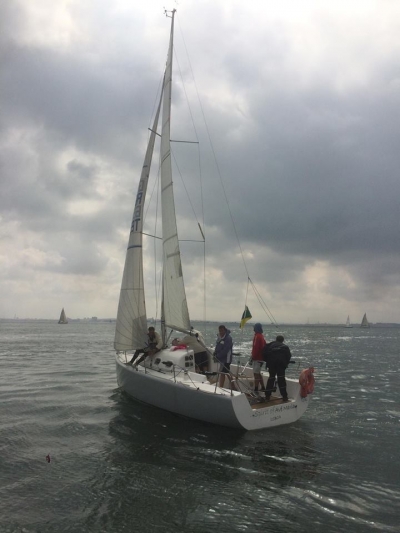
Surprises are part of the game-plan… That´s the beauty of it!
Another advantage of prototyping, is that it can be done during discovery and delivery phases, so that you can refine your design on the go, without major mistakes (meaning costly mistakes).
This is all good… but…
For improving existing products we need a common research aim, this can be achievable by formulating research questions, these can come from customer complaints, workshops, some other research,…
Furthermore research questions have aims, maybe we want to understand user needs, or finding gaps in the experience, or confirm steps on an assumption-based journey map or even understand how the ecosystem of services on a digital product is used. Be prepared for surprises, as we cannot anticipate user feedback, that´s the beauty of it – Surprise!
It´s like the first-beat on a regatta… then you can´t trace all the course till the finish… because we know we will be surprised!
We have a strategy, (call it the product vision), the long term objective, let´s say, where we want to position the boat on the race course. So, as regatta starts we move in that direction and then… surprise! A wind shift happens or a competitor shadows your wind.
Now, you have to adapt your tactics, still putting in place your strategy, and guess what…
For doing this in a winning way, you need a smart, creative and persistent crew with a deep knowledge of the boat, the data available, the competition, and also the ability to look and understand what is happening outside their boat as if we were able to have a birds eye view of the race course.







Leave A Comment