
The success of eLearning, like other digital products depends a lot on the discovery phase – let´s call it identifying learner´s learning needs.
Many times, we develop eLearning courses focusing on content and features, insights of learners are often overlooked.
If learning is an experience, we must care about the learner experience. To accomplish this we need to deeply know our learner (as we need to know our users on “other” digital products).
So… How can user research help us to focus on the learner experience?
Some of our learners might be early adopters and already know something about it, others are newcomers and this is their first contact with this subject, while others are experts.
One way of tackling this knowledge/skills/background diversity challenge is to build needs-based learner personas.
In an instructional design context, personas allow us to have a realistic representation of our key trainee audiences, their needs, pain points and expectations.
Are you personas good enough? They are as good as the research behind them. (this is also a key task on a service design discovery phase – mapping out personas).
If we get a sense of how our learners do their jobs/roles and understand their attitudes and comfort levels, we can more easily make friends with their learning experiences.
What do we want to know about the learners to build and update our personas?
- The 80%/20% audience – Main and secondary audiences;
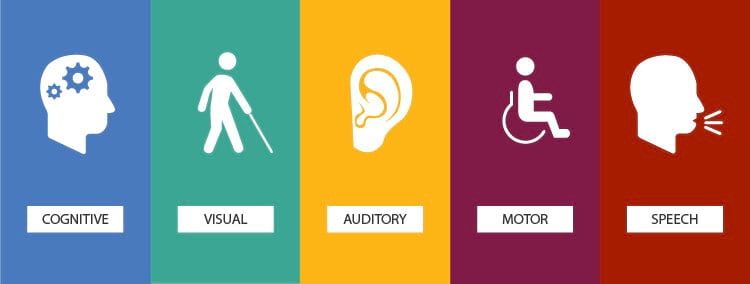
- Demographics – Educational and cultural background (if it´s relevant gender, age, localization,); Are there learners with special needs? (visual, audio, or other impairments);
- Knowledge & experience – Work experience; What learners know about the subject?; ; What´s the motivation for learning? Time our learners devote to training; Attitude towards learning.
- Technical – Are learners technically savvy?; What terms, technical language and writing style are best?;
- Management expectations – Expected level of participation, How learning success is monitored and measured?; What tone and voice;
Needs-based learner personas allows instructional designers to focus on the learners experience for each type of learner.
The one million dollar question:
Do we design a course for each persona (type of learner) if we have get an heterogeneous audience?
It depends… on resources, time constraints, training goals, monetizing strategy and how learning goals and learner types map.
Ultimately, even if the training audience is heterogeneous and even if, let´s say… 3 personas, represent only a subset of your trainees (hopefully a significant subset) we will be a lot better having personas. Why?
- Helps create empathy with your learner and their learning needs – What are their motivations, goals, needs, pain points and challenges?;
- Gives us real persons to connect with and to care for, thus making instructional design decisions learner centered – It provides a drive to build learner centered content;
- Provides a deeper understanding of why learners do the things they do and what they expect from the course – Needs-based learner personas are based on a cluster of trainee needs;
- Helps preventing generalizing – Don´t put all trainees into one big anonymous pool, assuming that everyone has the same needs and goals;
- Allows to craft scenarios with personas that will take the course/learning path.
One key take away is:
Even if it´s not feasible to design a learning experience for each learner type/persona, having them present will keep you focused on their experience and it´s a lot better than none.
Learning scenarios, a lot like service design journey maps are also a useful discovery research technique for training.
The key task here, is to gather some participants either with a shared perspective (learners from a particular audience/persona) or with differing perspectives (learners from various audiences/personas).
Learning scenarios can illustrate high-level learning journeys or more detailed journeys depending on the complexity on/or different paths a trainee can take to achieve learning goals on our course.
- If we have an “expert” persona, you might be building a learning scenario where the learner skips directly a final assessment quiz, if he fails, he can review the course or specific lessons of the course or retake the quiz or other assessment put in place. Once he passes the quiz has access to an advanced lesson;
- If we have an “intermediate” persona, we can have a scenario where the learner will browse the course index to review lessons he doesn’t remember/ or it´s new, so he can do the quiz whenever he is ready. Once he passes the quiz they have access to the advanced lesson;
- The newcomer persona takes the course from the start to finish and then takes the assessment. If he does not pass, he can either review the course or retake the quiz. Once he passes the quiz they have access to the advanced lesson.
If we are running a “one fits all personas course” we must be aware that the learning experience of a learner who completes the course doing only assessment activities is totally different from another that takes all the lessons from start to finish. These will be different learning experiences and it´s key to know how your learners fell about their individual learning experience.
Prototype testing is another technique used in user research that can be handy and useful. Doing it with real learners, allows us to get insights before we commit on building something.
The riskier and complex the course/learning path is, the more we need to prototype meaningful sections. Depending on the learning objectives, learner types, stakeholders and resources involved you may want to extend the scope of this activity.
There are quite a few relevant user research techniques that we can use, one I find very useful is usability testing. Some good reasons for doing it:
- Continuous feedback from representative groups of learners. Strive for having several testing moments along the building phase;
- Fail fast. Knowing, while you can make low cost adjustments, if the course meets(or not) learner expectations;
- Identify usability issues;
- Check if your learners had pain points;
- Get insights about learning journeys (if you have those);
- Get a sense of FAQ – Unresolved questions;
- Get insights about how your learner feel. Are they happy and confident on what they learn? Are they curious and motivated to learn more? Are they reference learners that would recommend the learning? Did the learning worked for them?
This is all a great fun, but you only get support for these activities in organizations that take learning seriously.
Our learners will not only have to use our digital product but also learn from it. Sure, it can be an iterative process, but you have to have a learner-centered mindset just like any other digital product.
A positive learning experience is more than getting new knowledge, skills or behaviors, it´s also about what trainees felt during the learning journey.





Leave A Comment