
Faster boats tend to win more regattas then their slower counterparts…
But ultimately there will be a faster boat then yours.
In this scenario there are two main options:
- Throw more money at the problem. A better boat, better sails, hire more crew. On the short run this will work… but if your overall success depends on this, eventually some guy with more money will come along and “here we go again”;
- Develop your crew and improve iteratively the potential of the team and the gear you have.
When searching for additional performance, the key for increasing performance on a sailing team, like in Service Design, is not always going faster. Instead you want to go fast but in the right direction with an eye on the environment and the competition while keeping things organized and emphatic within the team.
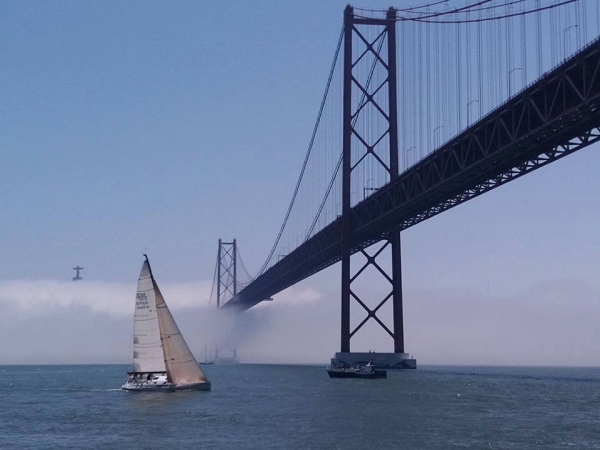
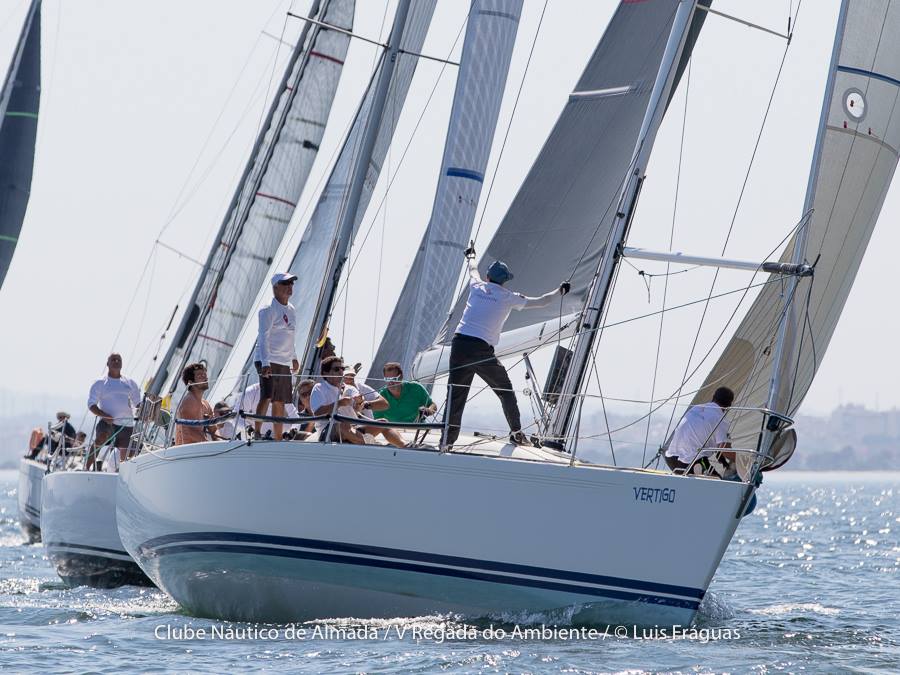
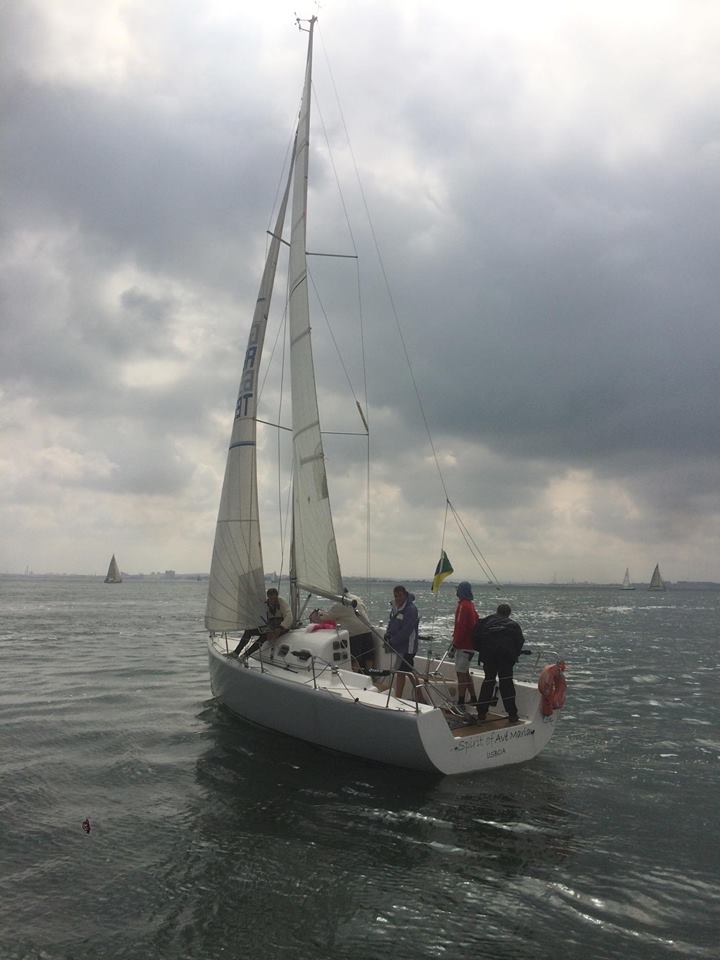
Emotion sailing team training in the Tagus River
The importance of empathy, organization, trust and feeling safe is paramount on a racing sailing boat.
To facilitate the crew’s work we have a crew organizer, a crew member that keeps an eye on the work processes and alerts and takes actions before we get into trouble
Sailing, like Service Design, is not an extreme activity. Extreme activities tend to put members on survival mode where the main concern is: Survival.
The best crews depend on a mix of knowledge, experience and most of all a preventive rather then a reactive approach. Like in Service Design, if you do not have a crew with these skills and mindset, you will probably end up in situations where you are trying to survive and your performance and outputs will suffer. You will spend lots of time and energy trying to rush out of tight situations.
On tight situations in a racing yacht you have to balance the crew’s safety, well being and motivation (without them you won’t go anywhere) and also take care of the boat without pushing it to the breaking point. It´s easier said then done. In a way it’s like balancing business goals, user needs, development limitations and multiple stakeholders.
5 minutes to start…
On the pre start of a regatta we have many tactical options available, but strategically we should have done our homework, some research.
As the start gun sounds we are not alone on the race course. Competitors, wind, current,… start influencing our decisions and we have to be aware that there are some “trains you cannot miss”, imagine if the wind pressure increases dramatically or the wind shifts direction abruptly.
Sailing like Service Design it´s a game of opportunities, if someone in the crew comes up with a breaking opportunity we have to rapidly see if it´s a feasible idea and decide what to do with it.
On the other hand if the competition makes a breaking move first we will surely be following instead of leading. In this scenario, experienced crews hold their act together, maintaining contact and working hard for another opportunity.
On the race course we constantly you have to decide which trains we cannot miss… as you cannot make a tight cover on all the competition, but again as in Service design the more distance you have from reality, competitors/clients/users the more riskier is the project.
As the crew gets more experience and mature it´s able to distinguish between the must win/can loose options… and did i mention that in a sailing crew, members with more responsibility are the ones that first assume responsibility when costly mistakes are made. It´s a leadership by example role model as leaders are there to protect you.
A lesson from yacht racing is: When things don’t go as expected crew members are not throwed overboard.
The approach to error on a race course is a lot like a Service Design project where the guys who have successful projects make the least and smaller errors. The similarities can be overwhelming and are quite interesting for a sailor Service Designer like myself:
- It´s important to make many shitty drafts first so that you can have several perspectives of what we can expect during the race course;
- A sailing crew is a diverse self organized team. The key is to facilitate communication and break complex decisions into “How might we…”;
- Doing. Not talking. One thing is to trim a sail, another is making a speech on how to do it. So we train, test and measure, test again and prototype sail combinations so that we can meet our goals;
- “Yes but…” and “Yes and…“. When training we use a lot of “Yes and…” especially if we have crew members with different perspectives as this allows us to have divert thinking on how to trim the boat differently and organize the crew;
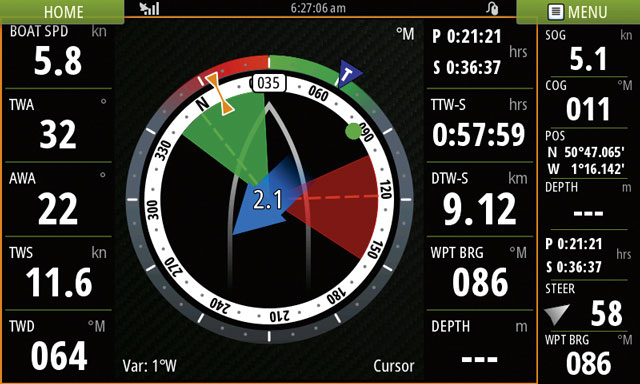
- Find the right problem before solving it right – On a upwind leg an unhappy boat tactician says:” We are down 0,3 knt on target upwind speed”. In a hurry the head sail trimmer trims the sail. He feels relieved and jumps back to the weather rail. Few minutes after the boat continues to lack speed… So what was the problem?. Like in Service Design it´s important to know if we are dealing with the real problem or a symptom of something deeper;
- It´s important to challenge our assumptions before creating a solution, that’s why training is important in sailing as research is in Service Design;
- Don´t put all the eggs in one basket – Go for a pile of ideas, not just one “killer idea” and never, never have just one prototype. If you want to take risks, do so on the early legs of the regatta and learn from what’s happening on the race course;
- Plan for iteration then adapt – Like Service Design boat trimming is an explorative cycle. We cannot plan exactly how the boat is going to be trimmed, so we need to be flexible enough to allow an adaptative and interactive process in the time we have to do it.
- Zoom in and zoom out – On a sailing boat it´s essential to switch from small details to the holistic big picture, to see how are positioned on the race course likewise in Service Design.
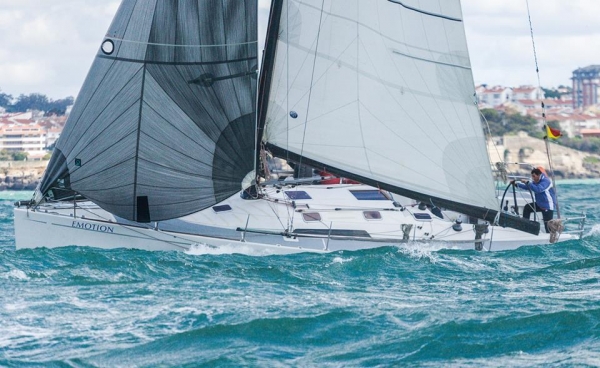
Emotion Sailing team… when faster is not always better
So…
if you are the head sail trimmer on a sailing boat and the tactician says that “the boat is not moving as fast as he wanted” you must know with reasoning and test(training) that:
- You know what the problem is. i.e. Is there a problem with the head sail trim?
IF…
there is little left solely to luck, opinions or aesthetics, we are doing solid work on the sailing boat and also on your Service Design project.
AND…
faster is not always better but better is always better.




Leave A Comment