
Management(whatever that is) and leadership often suffer from empty rhetoric and the quest for uniqueness and eloquence, which prioritize these over actionable outcomes.
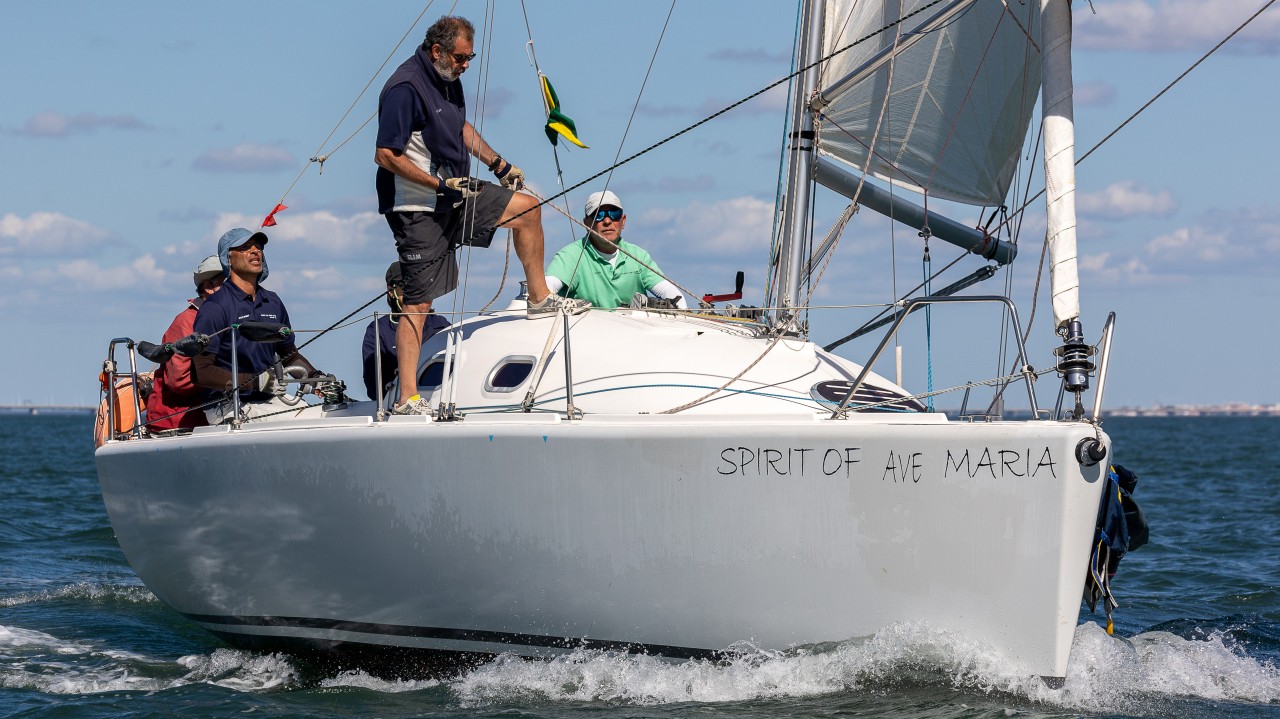
We quickly learn two essential things if we ride bikes on the long haul or sail competitively.
- Get rid of the clutter – Spend your energy on meaningful tasks that genuinely move the needle. Think of it as trimming excess weight from your boat, bike, or body. Once the excess weight is removed, your team and you will sail faster and more confidently.
- Get rid of unnecessary “sacred cows” – that stand in the way of genuine progress. The remedy is evident: honesty, transparency, and the courage to challenge ideas and mindsets that don’t serve your progress/actions.
Competitive sailing provides a vivid metaphor for leadership and team well-being. Why?
Before setting sail, the skipper and crew focused on two key aspects – The “current location” and the “desired destination,” and how to get around the course the fastest way possible. No bullshit. But things are not so simple; the team must monitor external variables — tides, wind direction, competition, crew work, and boat and sails tuning.
Within so many variables, a seasoned sailor knows that fixed, top-down command and control seldom work in an environment governed by shifting conditions. He does not need a PhD in space science to know this.
By contrast, this is a distant vision for old-school industries. Top-down, hierarchical leadership doesn’t work anymore. This is no new news.
Strip away the meaningless bulshit
Things like the language around ‘visions,’ ‘missions,’ and the ‘Big Hairy Audacious Goals’ stuck on the wall poster or the corporate intranet. Instead, you can focus on concrete objectives and actions with tangible results. If a concept doesn’t help steer you closer to your endpoint, you can discard it.
Celebrate candor
Encourage teams to question assumptions and propose alternatives. This is crucial for a sailing boat crew, as things change fast, and we must adapt together. Information management is not a source of power; it’s a sign of incompetence.
Prioritize learning over perfection.
Winning regattas is about learning, making the fewest errors, and staying in a continuous feedback loop. The key is to add value and adapt quickly. The worst mistake is clinging to practices that don’t deliver because “we have done this way for as long as we can remember.”
Step 1: Define your starting point — Keep It simple and honest
“Where are we today?” This question, straightforward as it seems, demands courage and candor.
Although we might be “humiliated, defeated, and broken,” the imperative is to admit the state openly when things go wrong.
Many organizations discover unhappy customers or underperforming products. The logical response is to speak with those who experience day-to-day operations firsthand rather than relying on metrics.
Much like a helmsman taking the crew member trimming a sail, leaders (managers usually don’t) must listen to the voices that rarely make it into the boardroom.
It’s trivial, but the most straightforward answers often address the core issues: Is customer satisfaction slipping? Is the backlog mounting? Do your customers repeatedly mention the same complaints?
As with sailing a boat, you won’t know how to trim your sails unless you understand the actual wind conditions. By doing so, they gain a front-line perspective of challenges, successes, and opportunities for course correction. This openness to diverse insights fosters a culture of continuous and “relentless learning.”
All organizations look very different when viewed from the bottom up.
Step 2: Define your endpoint – Stay on course with clarity
Once you’ve pinpointed your present “coordinates”, the next step is asking:
Where do we want to get to?
For some, this conjures visions, mission statements, and overblown strategic statements. What if we “liberate ourselves from the tyranny of the orthodoxy”? In other words, avoid becoming so enamored with crafting the perfect vision that you lose sight of the straightforward destination.
Setting a clear endpoint and a few waypoints directs every maneuver. Similarly, teams need a concrete, well-defined objective to guide their work, not bulshit.
This text’s example is crystal clear: “We want to win all the regattas that we enroll in.” That’s the goal—unembellished, powerful, and easy to rally around.
Reality can surprise a team, so it frequently has to adapt its approach. This cycle of trying, learning, and refining ensures that mistakes are caught early and improvements are quickly integrated.
The practice echoes the resilience needed on a yacht: if you get off course, we don’t wait; we correct our heading—we make minor, frequent adjustments to stay aligned with our endpoint and conditions.




Leave A Comment